A Complete Guide to Ozempic, Wegovy, and Mounjaro
If you have been researching weight loss medications or diabetes treatments, you have likely come across names like Ozempic, Wegovy, and Mounjaro. These popular medications belong to a class of drugs called GLP-1 Receptor Agonists, one of the fastest-growing categories of prescription drugs in the United States.
While these medications can assist with weight loss and blood-sugar control, they are powerful hormone-modifying drugs. Understanding how they work is essential – especially as thousands of patients have reported serious gastrointestinal side effects.
This guide breaks down what GLP-1 drugs are, how they work, and why they have become the subject of nationwide litigation.
What is a GLP-1 Receptor Agonist?
GLP-1 stands for glucagon-like peptide-1, a natural hormone released by your intestines after you eat. Its main functions include:
- signaling fullness to the brain
- helping regulate blood sugar
- slowing the rate at which food leaves the stomach
A GLP-1 Receptor Agonist is a laboratory-engineered medication designed to mimic this hormone. These drugs bind to the same receptors as natural GLP-1 but are significantly stronger and longer-lasting.
How Do GLP-1 Drugs Work in the Body?
Most GLP-1 medications are administered as a once-weekly injection. After entering the bloodstream, they create three main effects:
-
Increases Insulin Production:
When blood sugar rises, the drug prompts the pancreas to release insulin, helping lower glucose levels. -
Reduce Sugar Production by the Liver:
GLP-1 drugs suppress a hormone called glucagon, preventing the liver from releasing excess glucose into the bloodstream. -
Slows Down Digestion (Slow Gastric Emptying):
This is the most significant effect for both weight loss and reported injuries. By slowing how quickly food leaves the stomach, the drug helps you feel full longer. However, in some individuals, this effect becomes extreme, contributing to severe gastrointestinal problems.
The Major GLP-1 Medications on the Market – The "Big Three" & Other Common GLP-1 Drugs
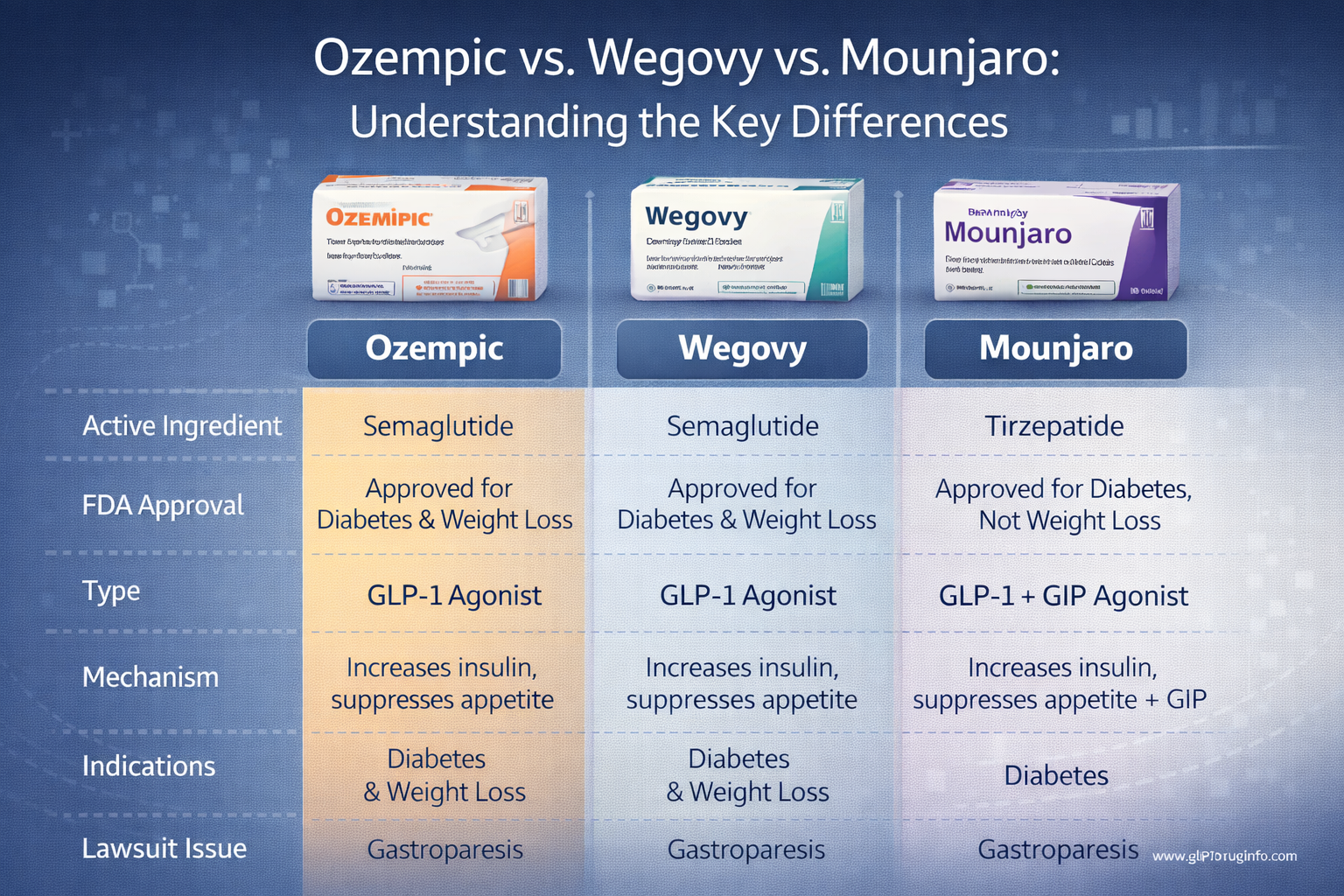
It can be confusing to keep track of the different brand names. Below is a breakdown of the most commonly prescribed GLP-1 receptor agonists, their active ingredients, and their FDA-approved uses.
| Brand Name | Active Ingredient | Manufacturer | FDA Approved For |
|---|---|---|---|
| Ozempic | Semaglutide | Novo Nordisk | Type 2 Diabetes |
| Wegovy | Semaglutide | Novo Nordisk | Chronic Weight Management |
| Mounjaro | Tirzepatide* | Eli Lilly | Type 2 Diabetes |
| Zepbound | Tirzepatide* | Eli Lilly | Chronic Weight Management |
| Trulicity | Dulaglutide | Eli Lilly | Type 2 Diabetes |
| Victoza | Liraglutide | Novo Nordisk | Type 2 Diabetes |
| Saxenda | Liraglutide | Novo Nordisk | Chronic Weight Management |
*Note: Tirzepatide (Mounjaro and Zepbound) is unique because it mimics two hormones: GLP-1 and GIP. This "dual action" is why they often produce even faster weight loss results.
Why Are There Lawsuits?
The same mechanism that helps with weight loss, slowing the digestive system, can in some cases become dangerously severe.
Thousands of patients have reported complications such as:
- Gastroparesis: Stomach paralysis that prevents normal digestion.
- Ileus: A potentially life-threatening intestinal blockage.
- Cyclical Vomiting: Persistent, uncontrollable vomiting that may require hospitalization.
Additionally, many prescriptions for Ozempic are off-label (written for weight loss despite being FDA-approved for diabetes). Some patients claim they were not adequately warned about the risks compared with the potential benefits.
Have You Experienced Severe Side Effects from a GLP-1 Drug?
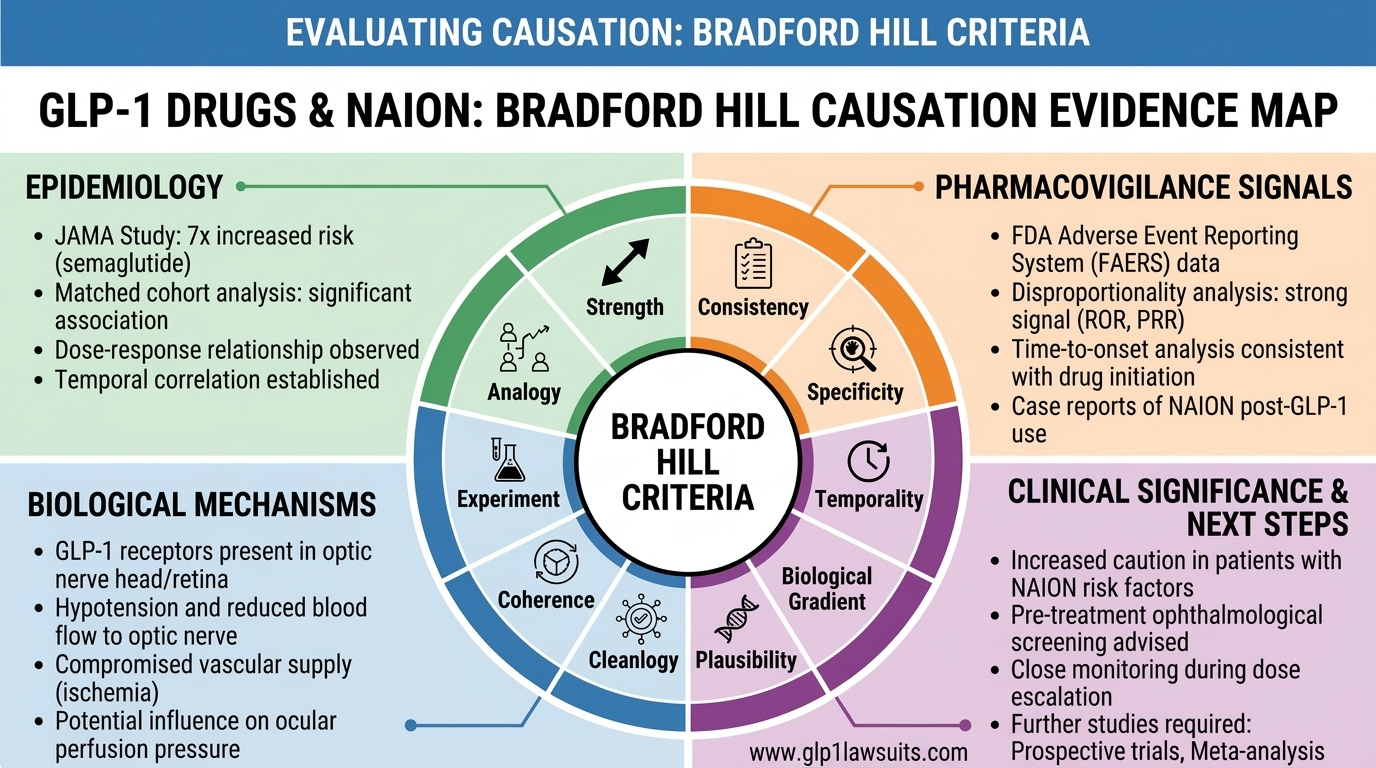
If you developed gastroparesis, persistent vomiting, intestinal blockage, or vision loss after taking Ozempic, Wegovy, Mounjaro, or another GLP-1 medication, you may be entitled to compensation.
Our legal team specializes in GLP-1 injury claims and works with top medical experts to build strong cases.
✓ Free Case Evaluation
✓ No Fees Unless We Win
✓ Nationwide Representation
Get Your Free Consultation Today
Email: Info@GLP1Lawsuits.com
Click here for a free case evaluation or learn what medical records you'll need.
Why Work With an Attorney Who Understands Both Sides
Successfully navigating GLP-1 litigation requires more than general personal injury experience—it demands deep knowledge of pharmaceutical regulation, FDA approval processes, and corporate decision-making at major drug companies.
Insider Pharmaceutical Industry Experience
Before representing injured patients, I worked in-house for a multi-national pharmaceutical company specializing in diabetes treatment, handling:
Regulatory compliance with FDA requirements Drug approval processes Corporate legal matters and risk assessment Safety data evaluation This insider experience gives me unique insight into:
How pharmaceutical companies evaluate safety signals Corporate decision-making regarding label warnings Litigation defense strategies employed by drug manufacturers Industry standards for adequate warnings Federal MDL Experience
Combined with over 10 years of experience in complex multidistrict litigation (MDL) in federal courts, I know how to:
Anticipate defense arguments before they're made Build cases that withstand aggressive challenges from elite defense firms Navigate the unique procedural requirements of MDL proceedings Maximize efficiency while preparing for individual trials National Resources with Personal Service
I work in partnership with one of the largest plaintiff law firms in the nation, giving you access to:
Extensive financial resources for expert witnesses Medical experts specializing in gastroenterology, endocrinology, ophthalmology, and pharmacology Cutting-edge litigation technology and support staff Coordinated national litigation strategy But you're not just a case number. You work directly with me throughout your case, receiving personalized attention and responsive communication.
Summary
GLP-1 receptor agonists are potent medications that dramatically alter the body’s satiety and digestion pathways. While they are FDA-approved for diabetes and weight management, their effects on gastric emptying have raised serious safety concerns.
Understanding how these drugs work is the foundation for recognizing why so many individuals are now coming forward with injury claims.