Thousands of patients are filing lawsuits against Novo Nordisk, the manufacturer of Ozempic (semaglutide), alleging the company failed to warn about severe side effects including vision loss (NAION), gastroparesis (stomach paralysis), intestinal blockages, and other life-threatening complications.
If you suffered serious health problems after taking Ozempic that weren’t adequately disclosed on the warning label, you may be entitled to compensation.
Free Case Evaluation | No Fees Unless We Win | Bilingual Services Available (中文)
Quick Navigation
- Lawsuit Updates
- Why Lawsuits Are Being Filed
- Current Litigation Status
- Injuries Named in Lawsuits
- What Is Ozempic & How It Works
- Ozempic for Weight Loss
- Health Risks & Side Effects
- Lawsuit Timeline
- Do You Qualify?
- About Your Attorney
- FAQ
Lawsuit Updates
December 2025: The Ozempic MDL now has 2,947 pending cases, with new lawsuits continuing to be filed weekly as more patients discover connections between their injuries and semaglutide use.
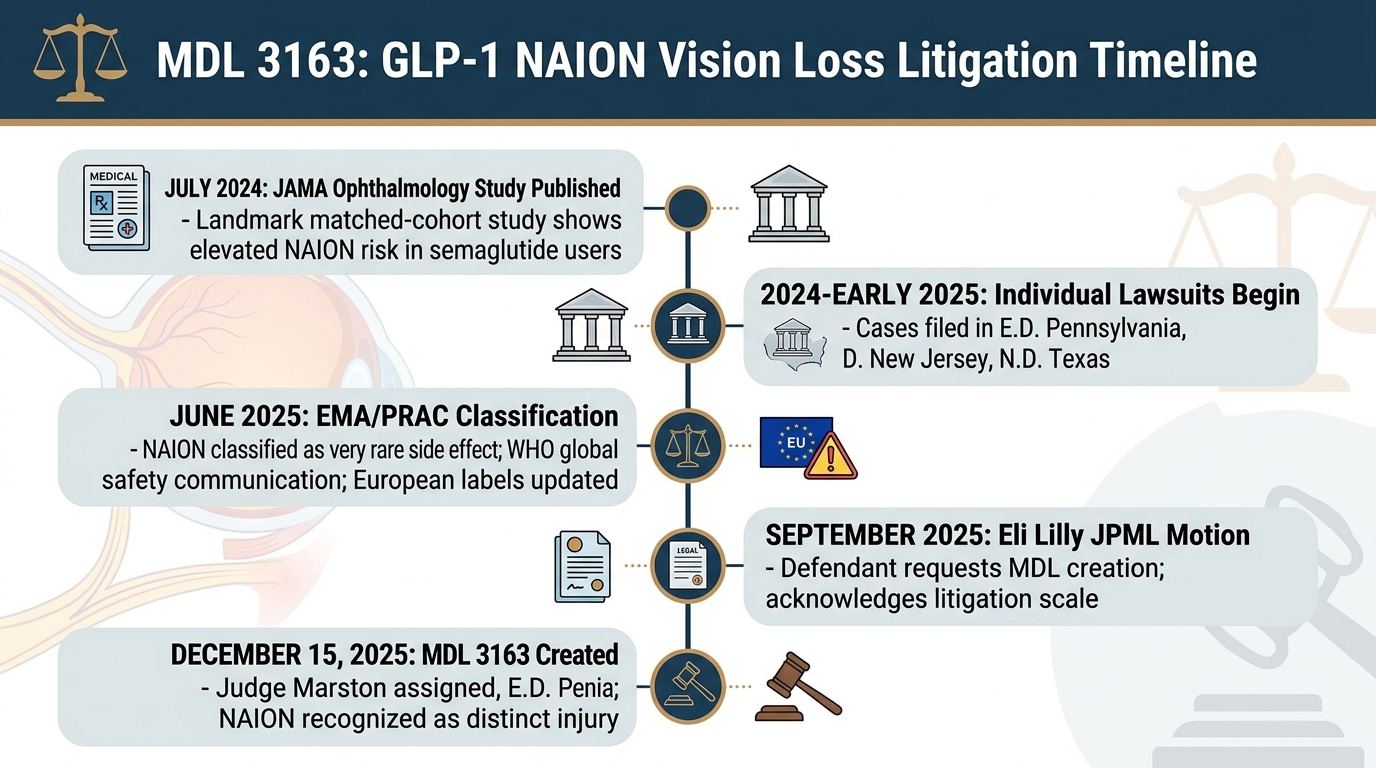
December 15, 2025: The Judicial Panel on Multidistrict Litigation created a separate, new MDL specifically for NAION (vision loss) claims, recognizing these cases involve distinct medical issues from gastrointestinal injuries.
April 2025: A study published in BMC Medicine found that semaglutide use showed an increased risk of vision impairment compared to other GLP-1 RA medications, strengthening the scientific basis for vision loss claims.
February 2025: Researchers published another large-scale study linking semaglutide use to NAION, analyzing 37.1 million adults with type 2 diabetes across 14 databases.
Key Ozempic Lawsuit Facts
- What is Ozempic? A once-weekly injectable medication FDA-approved for type 2 diabetes in 2017; widely prescribed off-label for weight loss
- Active ingredient: Semaglutide (GLP-1 receptor agonist)
- Manufacturer: Novo Nordisk (Denmark-based pharmaceutical company)
- Current litigation: Part of federal MDL No. 3094 in Eastern District of Pennsylvania, plus new separate NAION MDL
- Number of cases: 2,947 in main MDL as of December 2025, with hundreds more in vision loss MDL
- Status: Early stages - no settlements or verdicts yet, but litigation progressing toward bellwether trials
- Alleged injuries: Vision loss (NAION), gastroparesis, intestinal obstruction, ileus, gallbladder disease, pancreatitis, blood clots, and more
Why Lawsuits Are Being Filed
Plaintiffs allege they developed severe, unexpected side effects from Ozempic that were either:
- Not listed on the warning label at the time they were prescribed the medication, or
- Not adequately warned about in terms of severity and risk
Core Legal Claims
Failure to Warn: Novo Nordisk knew or should have known about severe side effects but failed to adequately disclose them to patients and physicians.
Evidence supporting claims:
- Ozempic’s predecessor drug Saxenda (liraglutide, approved 2014) caused similar gastrointestinal complications
- Internal safety data should have revealed risks years earlier
- Warning labels were only updated after thousands were injured
- Other countries added warnings before the U.S. did
Additional claims:
- Design defect - The drug is unreasonably dangerous for its intended use
- Negligence - Inadequate testing and post-market surveillance
- Fraudulent concealment - Hiding evidence of known risks
- Breach of warranty - Drug did not perform as represented
- Deceptive marketing - Minimizing risks while promoting benefits
Pattern of Delayed Warnings
Novo Nordisk has repeatedly added warnings to Ozempic’s label only after patients were harmed:
- March 2022 (4+ years after approval): Gallbladder disease added
- September 2023 (nearly 6 years after approval): Ileus and intestinal blockages added
- November 2024 (7 years after approval): Pulmonary aspiration during surgery added
- January 2025: Severe pancreatitis and kidney injuries emphasized
- December 2025: NAION (vision loss) still NOT adequately warned about
Thousands of patients were prescribed Ozempic before these warnings existed, depriving them of informed consent.
Current Litigation Status
Federal Multidistrict Litigation (MDL)
MDL No. 3094 - Gastrointestinal Injuries In re: Glucagon-Like Peptide-1 Receptor Agonists (GLP-1 RAs) Products Liability Litigation
Court: U.S. District Court for the Eastern District of Pennsylvania
Judge: Hon. Karen Spencer Marston (appointed June 2024)
Status: Active, progressing toward bellwether trials
Current numbers:
- 2,947 pending cases as of December 2025
- Growing by 100+ cases per month
- Involves multiple GLP-1 drugs: Ozempic, Wegovy, Rybelsus (Novo Nordisk) and Mounjaro, Trulicity, Zepbound (Eli Lilly)
Key developments:
- Master complaint filed November 2024
- Science Day held September 4, 2024 (establishing medical facts)
- Expert witness admissibility hearings scheduled (Daubert/Rule 702)
- Bellwether trial selection expected mid-2026
- Case management orders in place for coordinated discovery
Focus: Gastrointestinal injuries including gastroparesis, intestinal obstruction, ileus, severe gastroenteritis
NEW: Separate NAION/Vision Loss MDL (December 2025) In re: Glucagon-Like Peptide-1 Receptor Agonists (GLP-1 RAs) Non-Arteritic Anterior Ischemic Optic Neuropathy Products Liability Litigation
Court: U.S. District Court for the Eastern District of Pennsylvania
Judge: Hon. Karen Spencer Marston
Status: Newly established, early procedural stage
Why separate? The JPML recognized that NAION claims involve:
- Distinct medical issues (ophthalmology vs. gastroenterology)
- Different expert witnesses and causation theories
- Separate scientific literature and studies
- Different injury onset patterns
This allows focused judicial attention on vision loss claims while gastrointestinal cases proceed independently.
Focus: Vision loss specifically from NAION (non-arteritic anterior ischemic optic neuropathy) and related optic nerve injuries
State Court Litigation
New Jersey Multicounty Litigation (Pending) In June 2025, 21 plaintiffs requested consolidation of NAION-related lawsuits in New Jersey state court, providing an additional forum for vision loss claims.
Other GLP-1 Drugs in the MDL
Ozempic is not alone—the MDL includes similar lawsuits against other GLP-1 receptor agonist drugs:
Novo Nordisk products:
- Ozempic (semaglutide injection for diabetes)
- Wegovy (semaglutide injection for weight loss)
- Rybelsus (oral semaglutide tablet for diabetes)
- Saxenda (liraglutide injection for weight loss)
- Victoza (liraglutide injection for diabetes)
Eli Lilly products:
- Mounjaro (tirzepatide injection for diabetes)
- Zepbound (tirzepatide injection for weight loss)
- Trulicity (dulaglutide injection for diabetes)
All share the same class of mechanism (GLP-1 receptor agonists) and similar alleged side effects.
Ozempic Class Action vs. MDL
Important: There is NO class action lawsuit against Ozempic as of December 2025.
Instead, plaintiffs are filing individual lawsuits consolidated into an MDL for pre-trial efficiency.
Key differences:
| Feature | Class Action | MDL (Ozempic Cases) |
|---|---|---|
| Type of case | One case representing all class members | Individual cases grouped for efficiency |
| Automatic inclusion | Yes (must opt out) | No (must actively file) |
| Individual attorney | No (class attorneys represent everyone) | Yes (each plaintiff has own lawyer) |
| Settlement amount | Same for all class members | Individualized based on injury severity |
| Control over case | Limited | Greater individual control |
| Typical payout | Lower per person | Potentially higher |
Why MDL is better for injured patients:
- Damages calculated based on YOUR specific medical expenses, suffering, and losses
- You maintain control over accepting/rejecting settlements
- Option to proceed to individual trial if settlement isn’t adequate
- Stronger cases can achieve better results
How MDL works:
- Cases from across the country are transferred to one federal court
- Pre-trial proceedings (discovery, motions, expert depositions) are coordinated
- Bellwether trials (test cases) establish value ranges
- Individual cases may settle or proceed to trial
- If no settlement, cases can be remanded to original courts for trial
Excluded Injuries
Deep vein thrombosis (DVT) and blood clot cases were excluded from MDL 3094 in December 2024.
However, patients who suffered DVT, pulmonary embolism, or other blood clot injuries from Ozempic can still file separate individual lawsuits outside the MDL structure.
Injuries Named in Lawsuits
Plaintiffs report suffering serious health complications not adequately disclosed on Ozempic’s warning label at the time of prescription.
Vision Loss (NAION)
NOT adequately disclosed on warning label
Non-arteritic anterior ischemic optic neuropathy (NAION) is sudden vision loss caused when blood flow to the optic nerve is blocke - essentially a “stroke of the eye.”
July 2024 landmark study (JAMA Ophthalmology):
- Analyzed 16,000+ patients
- Diabetic patients taking semaglutide: 4x higher risk of NAION
- Weight loss patients taking semaglutide: 7x higher risk of NAION
February 2025 confirmation study:
- Analyzed 37.1 million adults with type 2 diabetes across 14 databases
- Found “further evidence of an association between semaglutide and NAION”
December 2024 Danish study:
- 317,698 type 2 diabetes patients NOT on semaglutide: 151 developed NAION (0.0475%)
- 106,454 type 2 diabetes patients ON semaglutide: 67 developed NAION (0.0629%)
- Showed increased risk persists across populations
June 2025 European regulatory confirmation: The European Medicines Agency (EMA) officially concluded that semaglutide drugs may cause NAION, finding risk more than doubled compared to other diabetes medications.
Dr. Joseph Rizzo, senior author of the July 2024 study and director of neuro-ophthalmology at Mass Eye and Ear in Boston, called NAION “in effect, a stroke of the optic nerve.”
NAION symptoms:
- Sudden, painless vision loss (usually one eye)
- Vision loss upon waking
- Blurred vision or blind spots that don’t improve
- Loss of color vision
- Permanent visual impairment
Critical facts:
- No treatment or cure exists
- Vision loss is permanent
- Can affect the second eye in 15-20% of cases
- Often misdiagnosed as diabetic retinopathy (which IS on the label)
Legal significance: NAION is still not adequately warned about on Ozempic’s label as of December 2025, despite overwhelming scientific evidence. This forms the basis for thousands of vision loss lawsuits now consolidated in the new NAION MDL.
Learn more about Ozempic vision loss lawsuits
Gastroparesis (Stomach Paralysis)
NOT adequately disclosed on warning label
Stomach muscles slow down or stop working entirely, preventing proper emptying. There is no cure.
Label disclosure inadequacy: Ozempic’s label mentions “delays gastric emptying” only in the context of drug interactions and pharmacodynamics. It does NOT warn about:
- Risk of developing permanent gastroparesis
- How many patients might experience this
- Severity and life-altering impact
- Potential permanence even after stopping medication
Symptoms:
- Severe nausea and vomiting (especially undigested food hours after eating)
- Feeling full after eating very little
- Severe abdominal bloating and pain
- Acid reflux and heartburn
- Loss of appetite and inability to maintain nutrition
- Dangerous blood sugar fluctuations (especially problematic for diabetics)
- Severe dehydration requiring hospitalization
- Malnutrition and dramatic weight loss
Impact on daily life:
- Unable to eat normal meals
- Constant, debilitating nausea
- Multiple hospitalizations for dehydration
- Need for feeding tubes in severe cases
- Inability to work or complete basic activities
- Permanent lifestyle limitations
- Depression and isolation
Why it’s more than “delayed gastric emptying”: While Ozempic is designed to temporarily slow stomach emptying, in some patients the effect becomes permanent, the stomach essentially “forgets” how to empty properly, even after stopping the drug.
Real case: A 52-year-old woman developed gastroparesis symptoms within one month of starting weekly semaglutide injections. Despite discontinuing Ozempic, her symptoms persisted, requiring ongoing medical management and significantly impacting her quality of life. Her case is part of the federal MDL.
Many gastroparesis plaintiffs report symptoms continuing indefinitely after discontinuing Ozempic, suggesting permanent nerve and muscle damage.
Learn more about Ozempic gastroparesis lawsuits
Intestinal Obstruction (Bowel Blockage)
NOT adequately warned about on original label; minimally addressed after September 2023
A physical blockage in the intestines preventing food and waste from passing through.
September 2023 label update: Ileus was added to “Postmarketing Experience” section with minimal detail:
“The following adverse reactions have been reported during post-approval use of semaglutide, the active ingredient of OZEMPIC. Gastrointestinal Disorders: Ileus”
This brief mention doesn’t convey the serious nature of the condition or potential complications.
May 2023 research letter (Acta Pharmaceutica Sinica B): Urged clinicians to be aware of GLP-1 adverse effects on the small intestine, noting:
- Clinical trials don’t last long enough to detect intestinal complications
- High occurrences of intestinal obstruction emerge 1.6 years after GLP-1 RA treatment
- Most GLP-1 RA clinical trials lasted less than one year
- Study of 25,000+ subjects found 3.5-fold increase in intestinal obstruction rates
Symptoms:
- Severe abdominal cramping and pain
- Complete inability to pass gas or stool
- Vomiting (sometimes fecal matter in severe cases)
- Severe bloating and abdominal distention
- Loss of appetite
Complications:
- Bowel perforation (rupture)
- Sepsis (life-threatening bloodstream infection)
- Bowel necrosis (tissue death)
- Emergency surgery
- Bowel resection (removal of intestinal section)
- Death if untreated
Ileus vs. Obstruction:
- Ileus: Intestines stop working WITHOUT physical blockage (functional problem)
- Obstruction: Physical blockage present (impacted stool, scar tissue, tumor)
Both conditions can occur in Ozempic users and both can be surgical emergencies.
Learn more about Ozempic intestinal obstruction lawsuits
Blood Clots, Deep Vein Thrombosis (DVT) & Pulmonary Embolism (PE)
NOT listed on warning label
2021 analysis of semaglutide clinical trials found increased risk of DVTs in patients taking the drug - a 266% increased risk.
Deep Vein Thrombosis (DVT): Blood clot forming deep in the body, most often in leg veins.
Symptoms:
- Swelling in one leg (usually calf or thigh)
- Pain or tenderness in affected leg
- Warmth in the area
- Red or discolored skin
Pulmonary Embolism (PE): Blood clot that breaks off and travels to the lungs—potentially fatal.
Symptoms (medical emergency):
- Sudden shortness of breath
- Chest pain that worsens with breathing
- Rapid heart rate
- Coughing up blood
- Lightheadedness or fainting
Legal status: DVT and blood clot cases were excluded from MDL 3094 in December 2024, but patients can still file separate individual lawsuits for these injuries.
Gallbladder Disease
Added to label March 2022 (4+ years after FDA approval)
FDA investigation published in March 2022 reported cases of acute cholecystitis (gallbladder inflammation) in GLP-1 users.
FDA findings:
- Median age: 55 years
- 53% female
- 47% developed acute cholecystitis within 90 days of starting the drug
Label warnings for cholelithiasis (gallstones):
- 1.5% of patients on 0.5mg Ozempic developed gallstones
- 0.4% of patients on 1mg Ozempic developed gallstones
Symptoms:
- Severe upper right abdominal pain
- Fever and chills
- Nausea and vomiting
- Jaundice (yellowing of skin/eyes)
- Clay-colored stools
Many patients require emergency surgery to remove the gallbladder (cholecystectomy).
Gastroenteritis
NOT listed on warning label
Severe inflammation of the stomach and intestines—far more serious than the “nausea” listed as a common side effect.
Symptoms:
- Severe, persistent diarrhea
- Violent vomiting
- Severe abdominal cramping and pain
- Fever
- Headaches and muscle aches
- Severe dehydration requiring IV fluids
Why it’s more than “common nausea”: While the label lists nausea as expected, many patients experience:
- Symptoms severe enough to require hospitalization
- Dehydration leading to kidney damage
- Inability to maintain any nutrition
- Symptoms lasting weeks or months
- Continuation of symptoms after stopping Ozempic
Real case: A 39-year-old woman was hospitalized with significant gastrointestinal issues. Her symptoms continued affecting her life even after stopping Ozempic, making daily tasks difficult or impossible.
Intraoperative Pulmonary Aspiration
Added to label November 2024 (7 years after approval)
Choking on regurgitated stomach contents during surgery or procedures requiring sedation/anesthesia.
Why Ozempic increases risk: The drug significantly delays gastric emptying, causing food and liquids to remain in the stomach much longer than normal—even after following standard preoperative fasting instructions.
American Society of Anesthesiologists (ASA) recommendations:
- Hold weekly Ozempic dose before undergoing surgery
- Disclose GLP-1 status to surgeon and anesthesiologist
- Extended fasting periods may be required
Consequences:
- Chemical pneumonitis (lung inflammation from stomach acid)
- Aspiration pneumonia (lung infection)
- Acute respiratory distress syndrome (ARDS)
- Respiratory failure
- Death
Legal significance: Patients who experienced aspiration events before November 2024 were not adequately warned about this risk.
Additional Serious Side Effects
Listed on label but often experienced more severely than disclosed:
- Pancreatitis - Can be necrotizing (tissue death) and life-threatening
- Acute kidney injury - Often from severe dehydration
- Diabetic retinopathy - Worsening of existing diabetic eye disease
- Thyroid tumors - Black box warning for medullary thyroid carcinoma
- Hypoglycemia - Especially when combined with insulin
Common reactions that can indicate serious problems:
- Nausea (reported in up to 44% of patients depending on dose)
- Vomiting (can lead to dangerous dehydration)
- Diarrhea (can cause electrolyte imbalances)
- Abdominal pain (may indicate gastroparesis, obstruction, or pancreatitis)
- Constipation (can become severe)
What Is Ozempic & How It Works
Brand name: Ozempic
Generic name: Semaglutide
Drug class: GLP-1 receptor agonist (GLP-1 RA)
Manufacturer: Novo Nordisk (Denmark)
FDA approval: December 5, 2017
Approved use: Treatment of type 2 diabetes in adults
Common off-label use: Weight loss (not FDA-approved for this purpose)
How Ozempic Works
Ozempic mimics glucagon-like peptide-1 (GLP-1), a naturally occurring hormone that:
- Increases insulin release from the pancreas
- Decreases glucagon secretion (hormone that raises blood sugar)
- Slows gastric emptying (delays food leaving the stomach)
- Signals the brain you’re full (promotes satiety)
These mechanisms help:
- Lower blood sugar in diabetic patients
- Reduce appetite in all users
- Promote weight loss
Administration:
- Once-weekly subcutaneous injection
- Dosage gradually increased (0.25mg → 0.5mg → 1mg → 2mg)
- Injected in abdomen, thigh, or upper arm
- Long-term use expected (per FDA approval)
Official FDA-approved claims:
- Improve glycemic control (blood sugar) in adults with type 2 diabetes
- Reduce risk of major cardiovascular events (heart attack, stroke, death) in adults with type 2 diabetes and established cardiovascular disease
NOT FDA-approved for:
- Weight loss or obesity treatment (that’s Wegovy, a higher-dose version)
- Type 1 diabetes
- Use in children under 18
How Ozempic Was Created: Development History
2005: First GLP-1 agonist (exenatide/Byetta) approved by FDA, requiring twice-daily injections
2008-2010: Novo Nordisk develops liraglutide, discovers appetite suppression effects
- Rats injected with liraglutide began fasting, nearly starving themselves
- Human trials: People on IV liraglutide ate 12% less at buffet meals
2010: Liraglutide approved as Victoza for type 2 diabetes (daily injection)
2014: Higher-dose liraglutide approved as Saxenda for weight loss
- Drawback: Modest weight loss (5% average), daily injections required
2010-2017: Novo Nordisk develops semaglutide—more potent, longer-lasting
December 2017: Semaglutide approved as Ozempic for type 2 diabetes (weekly injection)
June 2021: Higher-dose semaglutide approved as Wegovy for chronic weight management
2019: Oral semaglutide approved as Rybelsus for type 2 diabetes
FDA’s Role in Ozempic Approval
FDA Center for Drug Evaluation and Research (CDER) process:
- Preclinical testing - Drug developer tests on animals
- Human clinical trials - Phases I, II, and III testing for safety and efficacy
- New Drug Application (NDA) - Company submits data to CDER
- CDER review - Scientists (pharmacologists, chemists, doctors) evaluate evidence
- Approval decision - Based on whether benefits outweigh risks
Important limitation: CDER does not conduct its own testing, rather, it only reviews manufacturer-submitted data.
Critical gap: Ozempic is not FDA-approved for weight loss. This means FDA has not evaluated evidence of the drug’s safety as a weight loss medication, yet millions use it for this purpose.
Ozempic for Weight Loss
Despite only being approved for type 2 diabetes, Ozempic has become wildly popular for off-label weight loss.
Off-Label Prescribing Background
Off-label use is legal:
- Doctors can prescribe FDA-approved drugs for unapproved purposes
- Common medical practice for many medications
- Allows physicians to use clinical judgment
How Ozempic became a weight loss drug:
2017-2020: Soon after launch, Novo Nordisk began marketing potential weight loss benefits
2021: Company developed Wegovy (higher-dose semaglutide) specifically for weight loss
2021-2023: Celebrity endorsements and social media explosion
- Dramatic weight loss results widely publicized
- “Ozempic face” becomes pop culture term
- National drug shortages due to demand
August 2022: Added to FDA Drug Shortage List
February 2025: Finally removed from Drug Shortage List
Weight Loss Effectiveness
Clinical results:
- Average weight loss: 12-15% of body weight
- Significantly more effective than older weight loss drugs
- Results dependent on maintaining diet and exercise
2025 study findings: 65% of people using GLP-1 drugs for weight loss quit within one year, primarily due to:
- High cost (often not covered by insurance for weight loss)
- Side effects
- Difficulty maintaining long-term
Weight Regain After Stopping
Research shows: Patients who stop taking Ozempic regain two-thirds of lost weight within one year.
The problem:
- Weight loss is effective while taking the drug
- Weight returns when you stop
- But serious side effects may force discontinuation
- Some side effects persist even after stopping
This creates a difficult situation: continue the drug despite side effects, or stop and regain weight.
Other Versions of Semaglutide
Novo Nordisk Approved Products
Wegovy:
- Higher-dose semaglutide (up to 2.4mg)
- FDA-approved specifically for chronic weight management
- Weekly injection
- Subject to same lawsuits as Ozempic
Rybelsus:
- Oral tablet form of semaglutide
- FDA-approved for type 2 diabetes
- Taken daily (not weekly)
- First oral GLP-1 medication
- Also named in lawsuits
Compounded Semaglutide: Important Distinctions
During semaglutide drug shortages (2022-2025), compounding pharmacies created custom-mixed versions.
What is drug compounding? Process of mixing medications or substances to tailor drugs to specific patient needs.
Why patients used compounded versions:
- Ozempic/Wegovy shortages made approved drugs unavailable
- Compounded versions often cheaper
- Some patients couldn’t afford brand-name drugs
CRITICAL LEGAL DISTINCTION: If you took compounded semaglutide, you CANNOT join lawsuits against Novo Nordisk. You must have taken the FDA-approved, manufacturer-produced drug to have legal claims against the company.
FDA Warnings About Compounded Semaglutide
FDA concerns: Compounded drugs may use salt forms of semaglutide:
- Semaglutide sodium
- Semaglutide acetate
These are NOT the same active ingredient as FDA-approved semaglutide and have not been shown to be safe or effective.
FDA statement:
“Patients should be aware that some products sold as ‘semaglutide’ may not contain the same active ingredient as FDA-approved semaglutide products and may be the salt formulations. Products containing these salts, such as semaglutide sodium and semaglutide acetate, have not been shown to be safe and effective.”
March 2025 development: Federal judge halted production of compounded semaglutide after FDA removed drugs from shortage list, revoking temporary compounding authorization.
Adverse events from compounded semaglutide: FDA has received reports of severe reactions, but these are separate from lawsuits against Novo Nordisk.
Health Risks & Side Effects
Beyond labeled side effects, Ozempic has been linked to numerous serious, sometimes fatal complications.
FDA Adverse Event Reports: The Scale of the Problem
FAERS (FDA Adverse Event Reporting System) data:
2024: 10,418 adverse event reports, 386 deaths
2023: 6,487 adverse event reports, 89 deaths
2022: 3,754 adverse event reports, 42 deaths
2021: 2,784 adverse event reports, 32 deaths
2020: 2,339 adverse event reports, 30 deaths
2019: 1,244 adverse event reports, 22 deaths
2018: 1,059 adverse event reports, 7 deaths
Total through 2024: 27,656+ adverse event reports
Important caveats:
- FAERS is voluntary reporting—represents fraction of actual adverse events
- Medical experts estimate only 1-10% of adverse events are reported
- Reports don’t prove causation but signal potential safety concerns
- Actual injury numbers likely far higher
Lawsuit Timeline
March 2022: Gallbladder disease added (4+ years post-approval)
September 2023: Ileus added (nearly 6 years post-approval)
November 2024: Pulmonary aspiration added (7 years post-approval)
January 2025: Enhanced warnings for pancreatitis and kidney injury
Still missing as of December 2025:
- NAION (vision loss) - despite overwhelming evidence
- Gastroparesis - only mentioned in context of drug interactions
- Severe gastroenteritis - not distinguished from “common nausea”
- Intestinal obstruction - minimally addressed
Legal significance: Thousands were prescribed Ozempic before these warnings existed, forming basis for failure-to-warn lawsuits.
Deaths Linked to Ozempic
Hundreds of deaths have been reported to FAERS in patients taking Ozempic.
Deaths may be attributed to:
- Conditions directly caused by the drug (pancreatitis, aspiration, bowel perforation)
- Pre-existing conditions worsened by the drug
- Complications from side effects (dehydration, malnutrition)
- Cardiovascular events
Do You Qualify?
You may be eligible to file a lawsuit if:
Medication requirements:
- You took Ozempic (semaglutide injection for diabetes)
- OR Wegovy (semaglutide injection for weight loss)
- OR Rybelsus (oral semaglutide tablet)
- You have medical records documenting your prescriptions
- You took FDA-approved versions (not compounded semaglutide)
Injury requirements: You suffered one or more serious side effects:
- Vision loss or NAION
- Gastroparesis (stomach paralysis)
- Intestinal obstruction or ileus
- Severe gastroenteritis requiring hospitalization
- Gallbladder disease requiring surgery
- Blood clots (DVT/PE) - separate claim outside MDL
- Severe pancreatitis
- Aspiration during surgery
- Other serious complications
Additional factors:
- Your injuries required medical treatment or hospitalization
- You were not adequately warned about these specific risks
- The warning wasn’t on the label when you were prescribed Ozempic, OR
- The warning didn’t adequately convey the severity and risk
- Your injuries significantly impacted your quality of life
- Symptoms may have persisted after stopping Ozempic
Timing: Statutes of limitations vary by state (typically 1-3 years from injury discovery). Contact an attorney immediately to preserve your legal rights.
Potential Compensation in Ozempic Lawsuits
Important: No settlements or verdicts have been reached yet. Litigation is in early stages.
If successful, compensation may include:
Economic damages:
- Past and future medical expenses
- Hospital and emergency room costs
- Surgical procedures
- Ongoing treatment and medications
- Medical devices (feeding tubes, etc.)
- Lost wages and income
- Loss of earning capacity if permanently disabled
- Out-of-pocket expenses
Non-economic damages:
- Physical pain and suffering
- Emotional distress and mental anguish
- Loss of quality of life
- Diminished life enjoyment
- Permanent disability or disfigurement
- Loss of consortium (impact on relationships)
Punitive damages (potential):
- In cases of egregious corporate misconduct
- To punish knowing concealment of risks
- To deter future failures to warn
Payout amounts will depend on:
- Severity and permanence of your injuries
- Impact on your ability to work and function
- Medical expenses incurred
- Future care needs
- Age and life expectancy
- Quality of evidence linking injury to Ozempic
- Bellwether trial results (once they occur)
About Your Attorney
Successfully navigating GLP-1 litigation requires more than general personal injury experience - it demands deep knowledge of pharmaceutical regulation, FDA approval processes, and corporate decision-making at major drug companies.
Insider Pharmaceutical Industry Experience
Before representing injured patients, I worked in-house for a multi-national pharmaceutical company specializing in diabetes treatment, handling:
- Regulatory compliance with FDA requirements
- Drug approval processes
- Corporate legal matters and risk assessment
- Safety data evaluation
This insider experience gives me unique insight into:
- How pharmaceutical companies evaluate safety signals
- Corporate decision-making regarding label warnings
- Litigation defense strategies employed by drug manufacturers
- Industry standards for adequate warnings
Federal MDL Experience
Combined with over 10 years of experience in complex multidistrict litigation (MDL) in federal courts, I know how to:
- Anticipate defense arguments before they’re made
- Build cases that withstand aggressive challenges from elite defense firms
- Navigate the unique procedural requirements of MDL proceedings
- Maximize efficiency while preparing for individual trials
National Resources with Personal Service
I work in partnership with one of the largest plaintiff law firms in the nation, giving you access to:
- Extensive financial resources for expert witnesses
- Medical experts specializing in gastroenterology, endocrinology, ophthalmology, and pharmacology
- Cutting-edge litigation technology and support staff
- Coordinated national litigation strategy
But you’re not just a case number. You work directly with me throughout your case, receiving personalized attention and responsive communication.
Bilingual Legal Services
I provide legal consultations and services in Mandarin Chinese (中文) for clients who prefer to discuss their case in their native language.
Take Action: Free Case Evaluation
If you’ve suffered serious side effects from Ozempic, Wegovy, or Rybelsus, time is limited to file your claim. Statutes of limitations are strict and vary by state.
Contact me today for a free, confidential case evaluation. We’ll discuss your situation honestly and determine the best path forward, with no obligation and no upfront costs.
Mandarin Chinese services available
Remember:
- No fees unless we win your case
- Free initial consultation
- No out-of-pocket expenses
- We handle all aspects of your claim
- You focus on your health; we handle the legal battle
FAQ
Q: What are the most serious side effects of Ozempic?
A: The most serious side effects include vision loss (NAION), gastroparesis (stomach paralysis), intestinal obstruction, severe gastroenteritis, gallbladder disease, pancreatitis, blood clots, pulmonary aspiration during surgery, and thyroid tumors. Many of these were not adequately warned about on the label.
Q: Is Mounjaro the same as Ozempic?
A: No, but they’re similar. Mounjaro (tirzepatide) and Ozempic (semaglutide) are both GLP-1 receptor agonists used for type 2 diabetes. They have different active ingredients. Mounjaro is manufactured by Eli Lilly; Ozempic by Novo Nordisk. Both are involved in the federal MDL for similar side effects.
Q: Am I eligible to file an Ozempic lawsuit?
A: You may be eligible if you took Ozempic, Wegovy, or Rybelsus and suffered serious side effects (vision loss, gastroparesis, intestinal blockage, etc.) that weren’t adequately warned about. You need medical records documenting your prescription and diagnosis. Contact an experienced attorney to evaluate your specific case.
Q: Is Ozempic safe?
A: Ozempic carries significant risks. While the FDA approved it for type 2 diabetes, many of its most severe risks (gastroparesis, NAION, intestinal blockages) were not adequately disclosed on warning labels. Thousands have experienced serious, sometimes permanent, side effects. You should discuss all risks with your doctor before starting or continuing the medication.
Q: How much will an Ozempic lawsuit pay out?
A: No verdicts or settlements have been reached yet. Litigation is in early stages. If successful, payouts will depend on injury severity, medical expenses, lost wages, pain and suffering, and other individual factors. Because these are individual cases (not class action), compensation is tailored to each person’s specific damages.
Q: Is there a class action lawsuit against Ozempic?
A: No. There is no class action lawsuit. Instead, individual lawsuits are consolidated in an MDL for pretrial efficiency. This is actually better for injured patients because compensation is individualized based on your specific injuries rather than the same amount for everyone.
Q: How long will Ozempic lawsuits take?
A: MDL cases typically take 2-4 years from filing to resolution. The Ozempic MDL is currently in early stages with bellwether trials expected mid-2026. Some cases may settle after bellwether results; others may proceed to individual trials. Timelines vary significantly by case.
Q: What’s the deadline to file an Ozempic lawsuit?
A: Statutes of limitations vary by state, typically 1-3 years from when you discovered (or should have discovered) your injury was caused by Ozempic. These deadlines are strict. Contact an attorney immediately to preserve your rights. Waiting too long can permanently bar your claim.
Q: Can I sue if I took compounded semaglutide instead of Ozempic?
A: No. Current lawsuits are against Novo Nordisk for their FDA-approved products (Ozempic, Wegovy, Rybelsus). Compounded versions are made by individual pharmacies, not Novo Nordisk. You must have taken the manufacturer’s branded product to join the litigation.
Q: Do I need to stop taking Ozempic to file a lawsuit?
A: Not necessarily. You may still qualify even if currently taking the medication. However, DO NOT stop prescribed medication without consulting your doctor first- abrupt discontinuation can affect blood sugar control. You can evaluate legal options while continuing medical care under your physician’s supervision.
Q: What if I only took Ozempic for a few weeks or months?
A: You may still qualify. Some patients developed severe side effects (like gastroparesis) within weeks of starting the medication. The key factors are: (1) Did you suffer serious injuries? (2) Were you adequately warned about those risks? Duration of use is less important than injury severity and inadequate warnings.
Q: Will I have to go to court and testify?
A: Most cases settle without trial. If your case is selected as a bellwether trial or proceeds to individual trial, you may need to testify. However, as part of an MDL, your case benefits from shared discovery and coordinated strategy that often leads to settlement. If trial is necessary, your attorney will prepare you thoroughly.
Q: How much does it cost to hire an Ozempic lawyer?
A: Nothing upfront. Ozempic lawsuits are handled on contingency - we only get paid if we recover compensation for you. All case evaluation, investigation, expert witnesses, and litigation costs are advanced by our firm. You pay nothing unless we win your case.
Q: What if my doctor prescribed Ozempic off-label for weight loss?
A: Off-label prescribing is legal and common. The lawsuit focuses on whether Novo Nordisk adequately warned doctors and patients about risks, not whether your prescription was appropriate. In fact, evidence suggests weight loss users may face even higher risks than diabetes patients for some side effects like NAION.
Q: Can I sue if the side effect IS listed on the warning label?
A: Possibly. If you developed a side effect before it was added to the label, you weren’t warned. Also, even listed side effects may qualify if warnings were inadequate about severity or likelihood. For example, the label’s mention of ileus (added September 2023) doesn’t convey how serious the condition can be. Consult an attorney to evaluate your specific timing and circumstances.
Q: What happens if I accept a settlement - can I still sue later for new injuries?
A: Typically, settlements include releases preventing future claims related to the medication. This is why individualized case evaluation is crucial. Your attorney should assess all current injuries and potential future complications before recommending settlement acceptance.
Q: My family member died after taking Ozempic. Can I file a lawsuit?
A: Yes, family members may be able to file wrongful death claims if Ozempic contributed to or caused the death. This would be handled as a separate type of claim with different compensation elements (funeral expenses, loss of companionship, lost financial support, etc.). Contact an attorney who handles both personal injury and wrongful death cases.
Q: What if I developed multiple side effects from Ozempic?
A: Your case would potentially involve multiple injury claims, which could increase your compensation. Make sure to disclose all health problems that developed after starting Ozempic to your attorney—even if they seem unrelated. Medical experts can help determine causation.
Q: How do I prove Ozempic caused my injuries?
A: Through medical records, expert testimony, scientific literature, and timeline documentation. Your attorney will work with medical experts to establish causation, review your complete medical history, rule out alternative causes, and demonstrate the link between Ozempic use and your injuries.
Q: Will my medical information be kept confidential?
A: Yes. Attorney-client privilege protects your communications. During litigation, some medical information may be disclosed in court filings (with personally identifying details typically redacted). Your attorney will explain the scope of disclosure and work to protect your privacy to the extent possible while pursuing your claim.
Important Medical Disclaimer
If you are currently taking Ozempic or any semaglutide drug and experiencing side effects:
DO NOT stop taking prescribed medication without consulting your healthcare provider first.
Abruptly stopping Ozempic can dangerously affect your blood sugar control and cause other complications. Your doctor can help you safely discontinue the medication or switch to alternatives if needed.
Seek immediate medical attention if you experience:
- Sudden vision changes or vision loss
- Severe, persistent abdominal pain
- Persistent vomiting or inability to keep food/liquids down
- Signs of pancreatitis (severe pain radiating to back)
- Signs of allergic reaction (difficulty breathing, swelling, severe rash)
- Symptoms of blood clots (leg swelling/pain, chest pain, shortness of breath)
- Signs of severe dehydration (dizziness, dark urine, confusion)
- Inability to pass gas or have bowel movements
Your health and safety are the priority. Get medical care first, then explore legal options.
Last Updated and Reviewed by a Licensed Attorney: February 2026
Legal Disclaimer: This website provides general information about Ozempic lawsuits and does not constitute legal or medical advice. No attorney-client relationship is formed by reading this content or submitting a contact form. Each legal case is unique and evaluated on its individual merits. Past results do not guarantee future outcomes. Statutes of limitations apply—contact an attorney promptly to protect your rights. Always consult qualified medical professionals regarding health decisions and qualified legal professionals regarding legal matters.