Deep Vein Thrombosis (DVT): The Hidden Blood Clot Risk of GLP-1 Drugs
When patients start taking Ozempic, Wegovy, or Mounjaro, they are usually warned about stomach issues. Few are told to watch for signs of blood clots.
However, emerging reports and legal filings have linked the use of GLP-1 receptor agonists to an increased risk of Deep Vein Thrombosis (DVT) and Pulmonary Embolism (PE).同之前文章同样需求
While the drugs themselves are not blood thinners or thickeners in the traditional sense, the physiological changes they trigger in the body can create a "perfect storm" for clot formation.
What is Deep Vein Thrombosis (DVT)?
Deep Vein Thrombosis (DVT) occurs when a blood clot (thrombus) forms in one of the deep veins of your body, usually in the legs.
The danger of a DVT is not just the clot itself, but the risk that it will break loose and travel through the bloodstream to the lungs. This causes a Pulmonary Embolism (PE), a life-threatening blockage of blood flow to the lungs.
The "Dehydration Cascade": How GLP-1s May Cause Clots
Unlike gastroparesis, which is a direct effect of the drug on the stomach muscles, DVT is often a secondary complication caused by how the drug affects your hydration levels and blood viscosity.
The diagram above illustrates how a DVT forms in the leg vein. But how does a weight loss drug trigger this?
1. The Dehydration Factor
The most common side effects of GLP-1 drugs are severe nausea, vomiting, and diarrhea.
- When you vomit or have diarrhea frequently, your body loses massive amounts of fluid.
- Many patients on these drugs also report a reduced thirst drive, meaning they don't drink enough water to replace what is lost.
2. Increased Blood Viscosity
- As you become dehydrated, the volume of water in your blood decreases, but the red blood cells and clotting factors remain.
- This causes your blood to become thicker and more "viscous" (sludge-like). Thicker blood flows more slowly and is much more prone to clotting.
3. Immobility
- Patients suffering from severe "Ozempic fatigue" or constant nausea are often less active, spending long periods lying down or sitting.
- Immobility is a primary risk factor for DVT because the calf muscles aren't moving to pump blood back up to the heart.
A Statistically Significant Risk?
Recent studies have begun to validate these concerns. A meta-analysis published in 2024 involving data from multiple randomized controlled trials found that patients taking GLP-1 receptor agonists had a statistically significant increased risk of developing DVT compared to control groups.
Some legal filings cite studies suggesting the risk could be significantly higher for patients who have been on the medication for longer than 1.5 years.
Warning Signs: What to Look For
Because a clot can turn fatal in minutes if it travels to the lungs, you must know the difference between a leg cramp and a DVT.
Symptoms of DVT ( usually in one leg):
- Swelling: One leg looks larger than the other.
- Pain or Tenderness: Often feels like a cramp or "charley horse" in the calf that won't go away.
- Discoloration: The skin on the leg may look red, purplish, or blue.
- Warmth: The painful area feels warm to the touch compared to the rest of the skin.
Symptoms of Pulmonary Embolism (Emergency):
- Sudden shortness of breath.
- Sharp chest pain that gets worse when you breathe in.
- Coughing up blood.
- Rapid heart rate and dizziness.
If you experience symptoms of a Pulmonary Embolism, call 911 immediately.
DVT and Your Legal Rights
While DVT is currently a less common claim than gastroparesis, it is a severe injury that attorneys are actively investigating.
If you suffered a blood clot, DVT, or Pulmonary Embolism while taking Ozempic, Wegovy, or Mounjaro—especially if you also suffered from severe dehydration or vomiting prior to the clot—you may have a valid claim for compensation. The argument is that the manufacturers failed to warn patients that the gastrointestinal side effects could lead to such dangerous vascular complications.
Contact Us for a Free Consultation
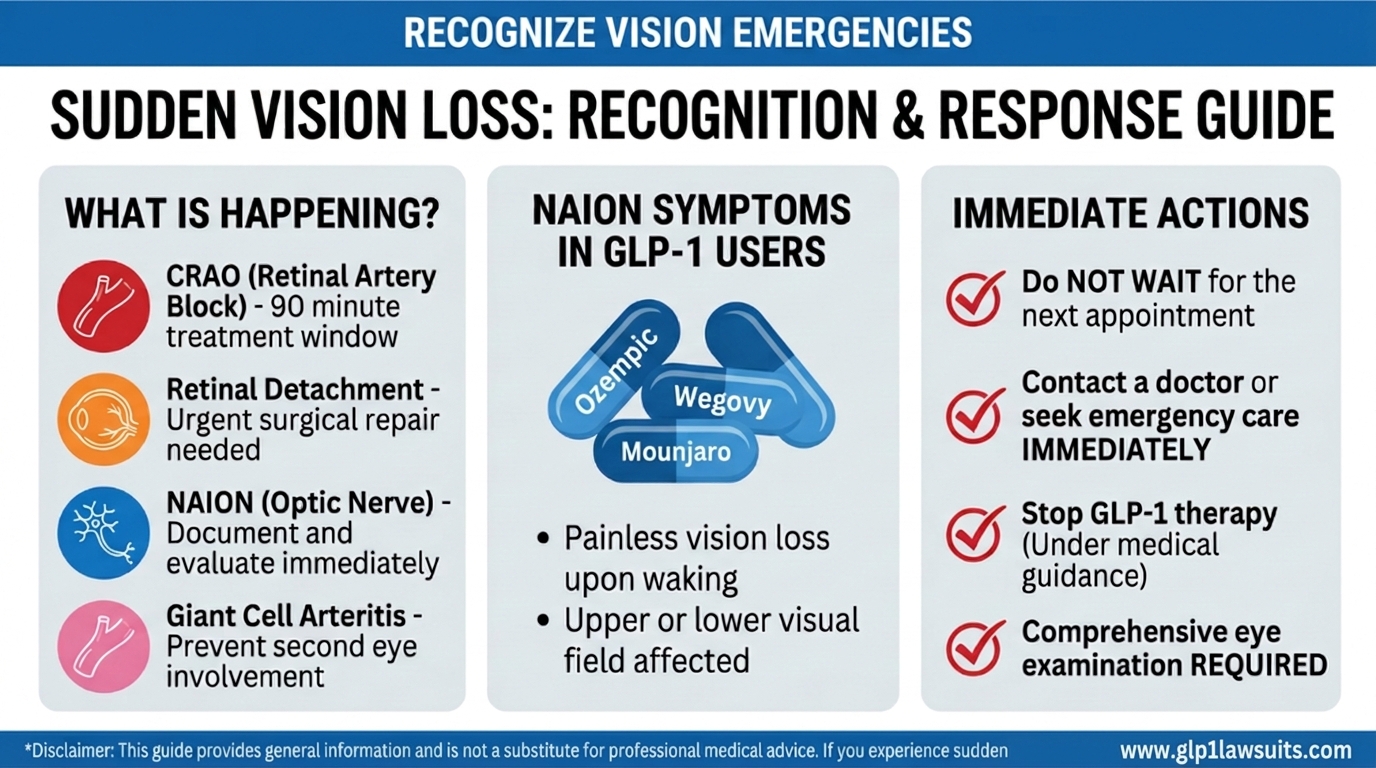
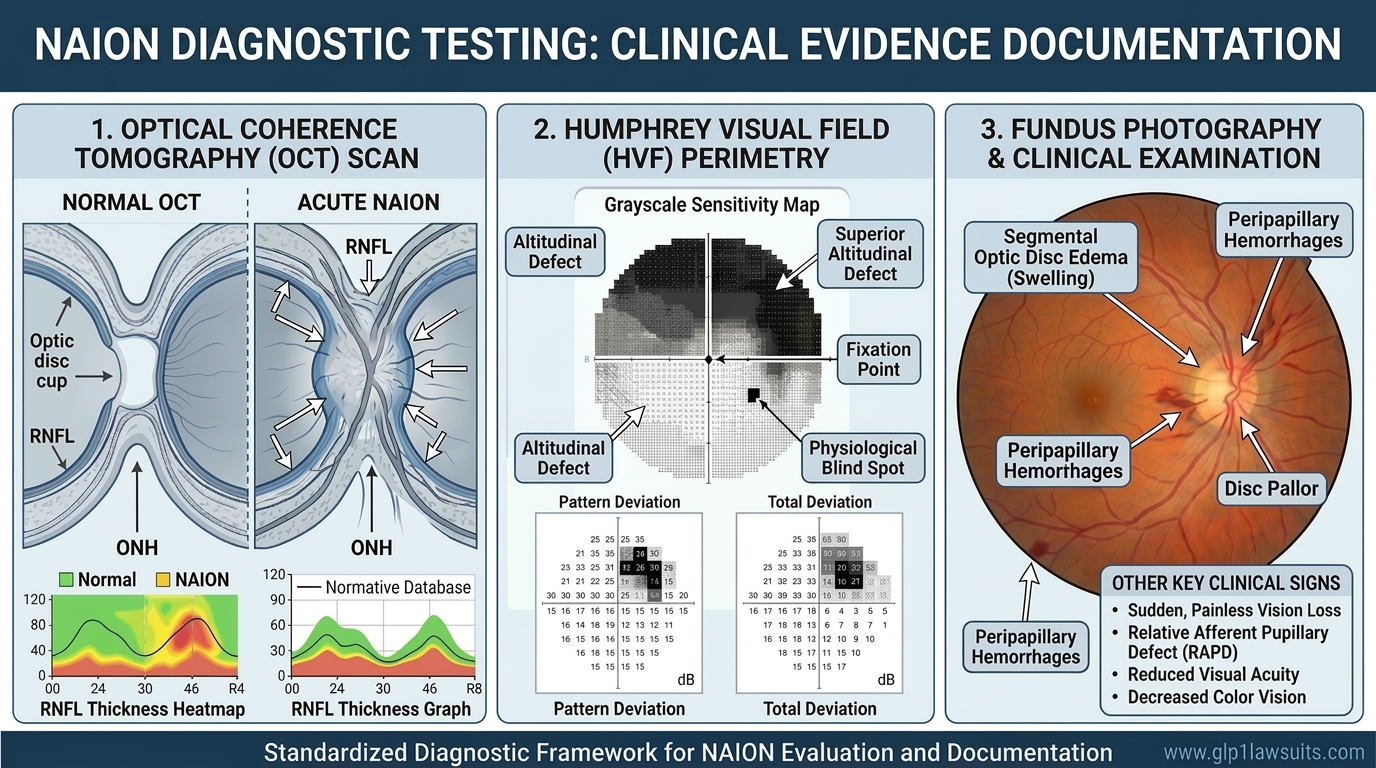
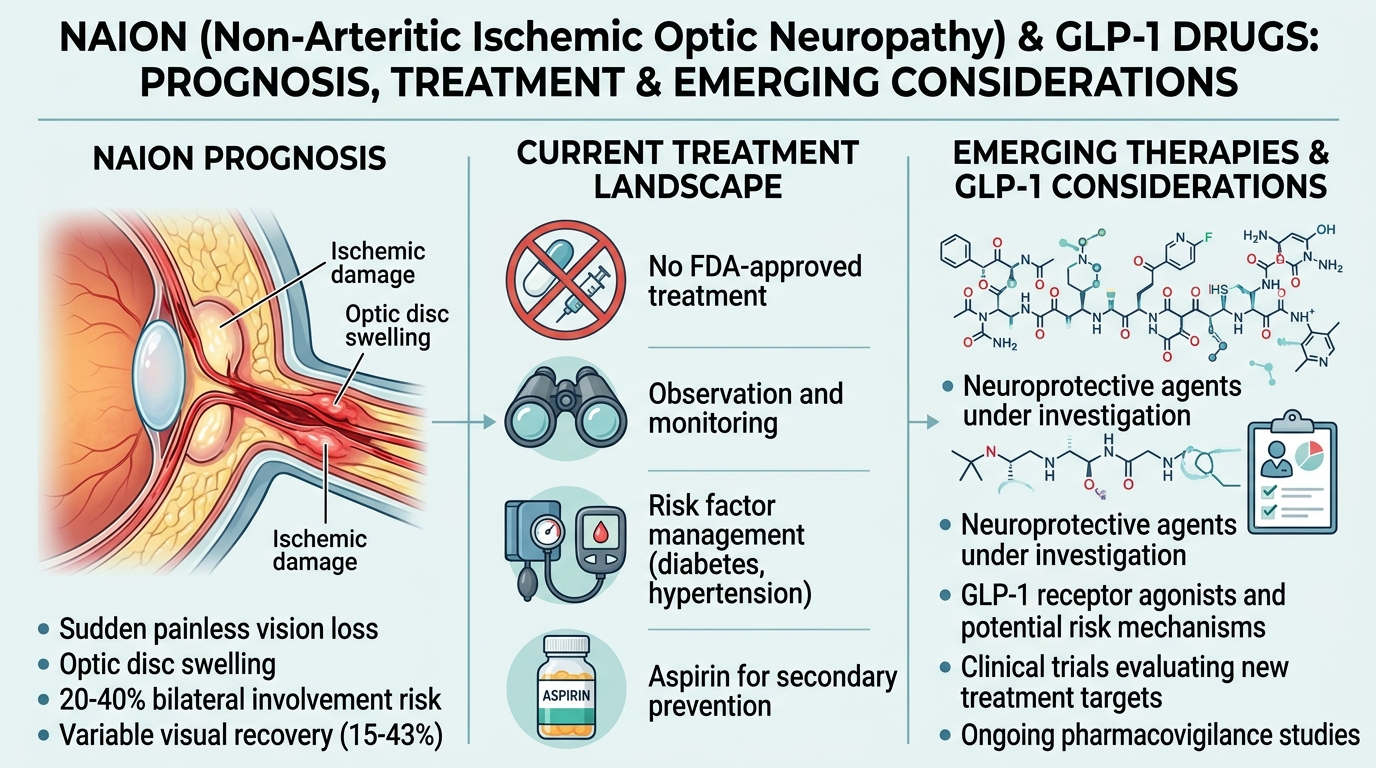
If you took Ozempic, Wegovy, Mounjaro, or Zepbound and developed gastroparesis, ileus, NAION, or DVT during the period when warnings were inadequate, you may have a legal claim.
Visit www.GLP1lawsuits.com to:
- Free case evaluation
- Speak with experienced attorneys
- Learn more about your legal options
- Join others seeking justice
No upfront fees. No costs unless we win your case.
Don't let the statute of limitations run out—contact us today to protect your rights and seek the compensation you deserve.
Disclaimer
This article provides general information only and does not constitute medical or legal advice. For medical concerns, consult a qualified healthcare provider. For legal guidance, consult a licensed attorney. Each case is unique and past results do not guarantee future outcomes.
© 2025 GLP1lawsuits.com | All Rights Reserved